Designing a Tablet-First Experience: Better Inventory Management
Sep 2, 2024
Delivereasy
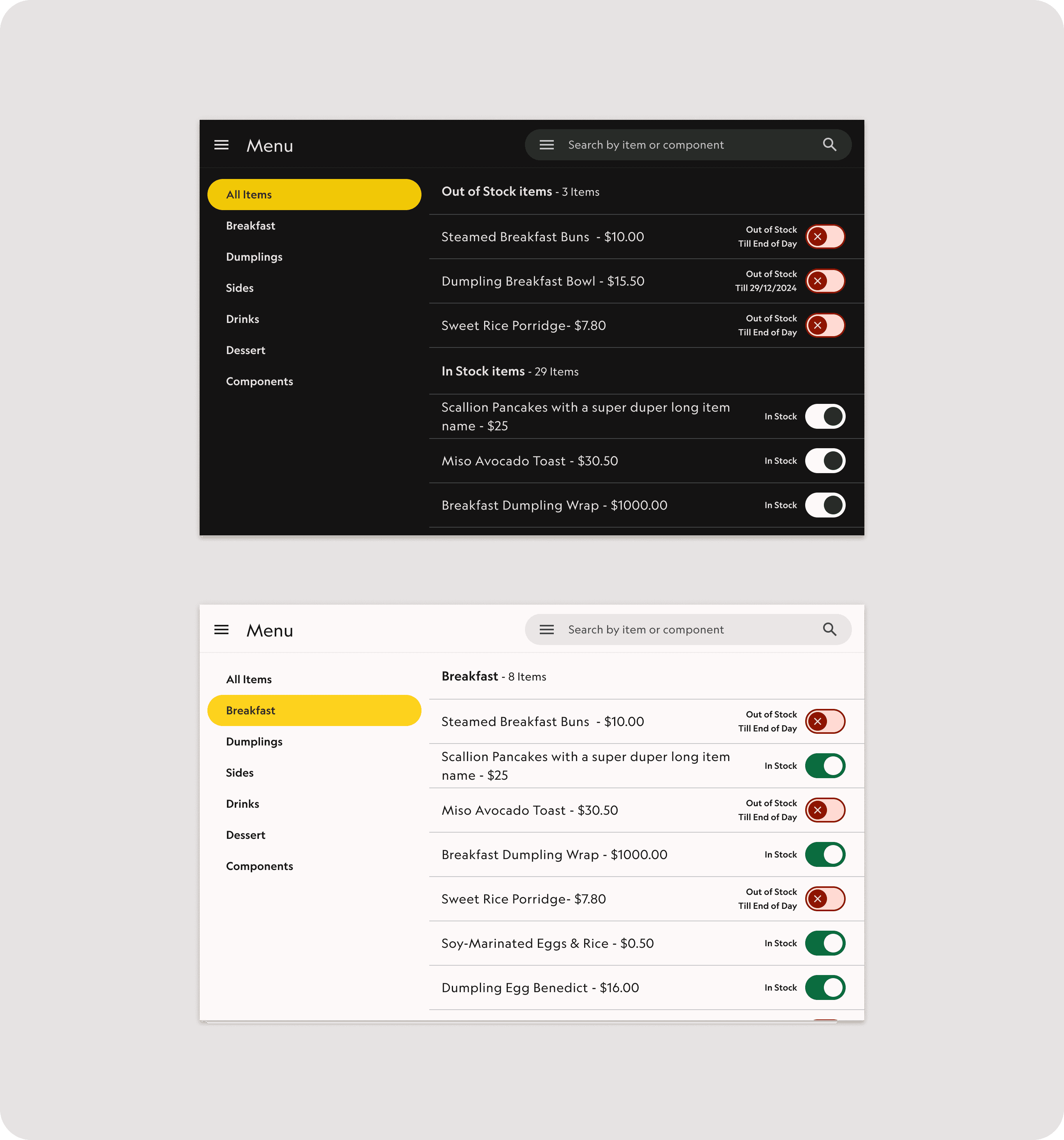
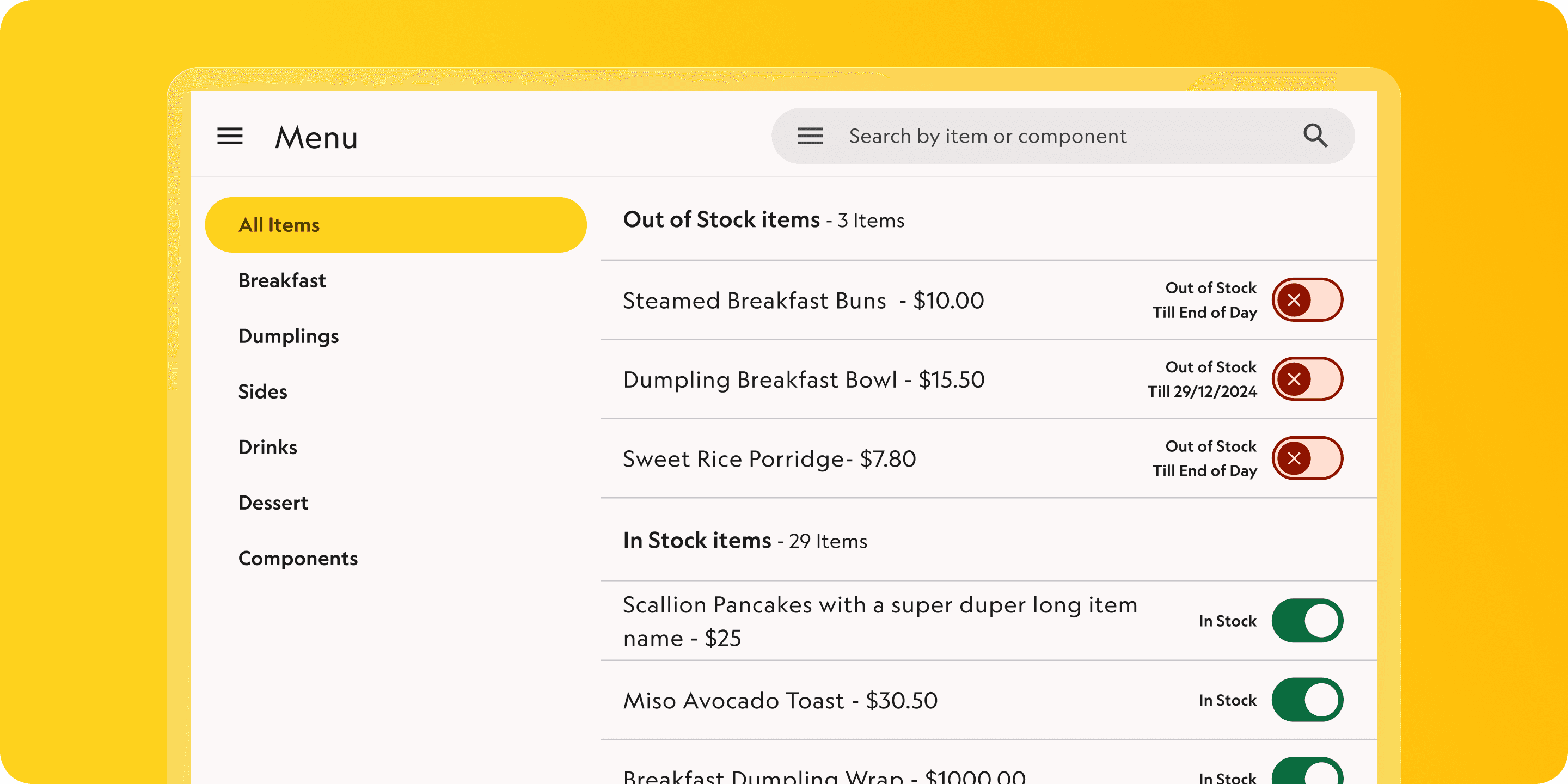
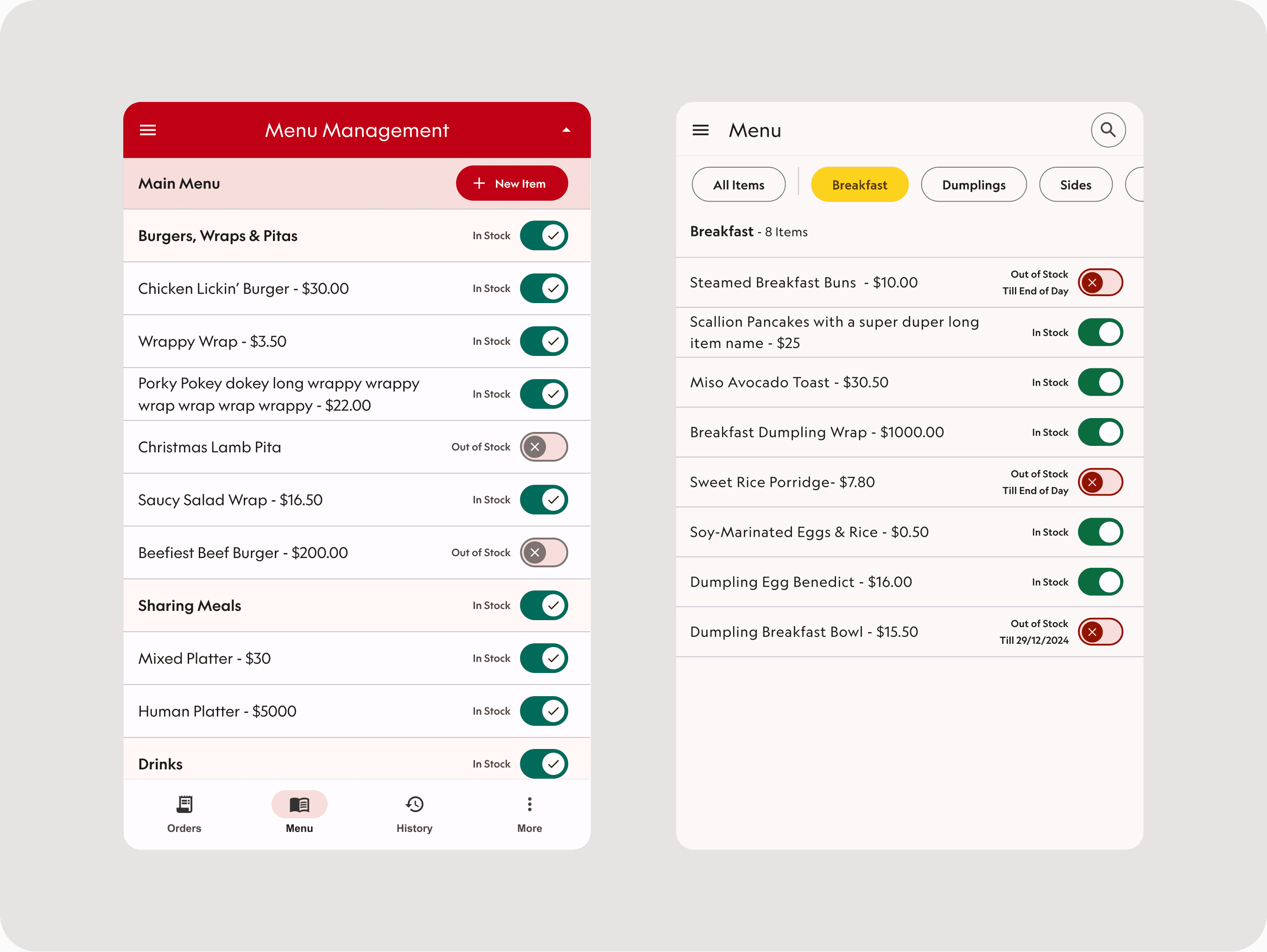
This project focused on redesigning inventory management on our in‑store tablets. Alongside a shift from portrait to landscape layouts (driven by new hardware and industry patterns), the goal was to give restaurants clearer, more proactive ways to manage out‑of‑stock items—without slowing down service or creating accidental menu chaos.
Role
Sole UX Designer, Interaction Design, Wireframing, Prototyping
Tools
Figma & Plugins, FigJam, ChatGPT, Material Design 3 Components
Our tablets are used in fast-paced restaurant environments, where decisions are made quickly and mistakes are costly. As new tablets rolled out that only supported landscape orientation, existing inventory tools — originally designed for simpler setups — began to show their limits. The project balanced hardware and software constraints with real-world kitchen workflows.
At the same time, menus were becoming more complex, with multiple menus, nested categories, and shared components. The existing “out of stock” behaviour treated inventory as a simple on/off toggle, which didn’t reflect how kitchens actually operate and led to unpredictable menu states.
Reframed inventory from a toggle to a time-based decision
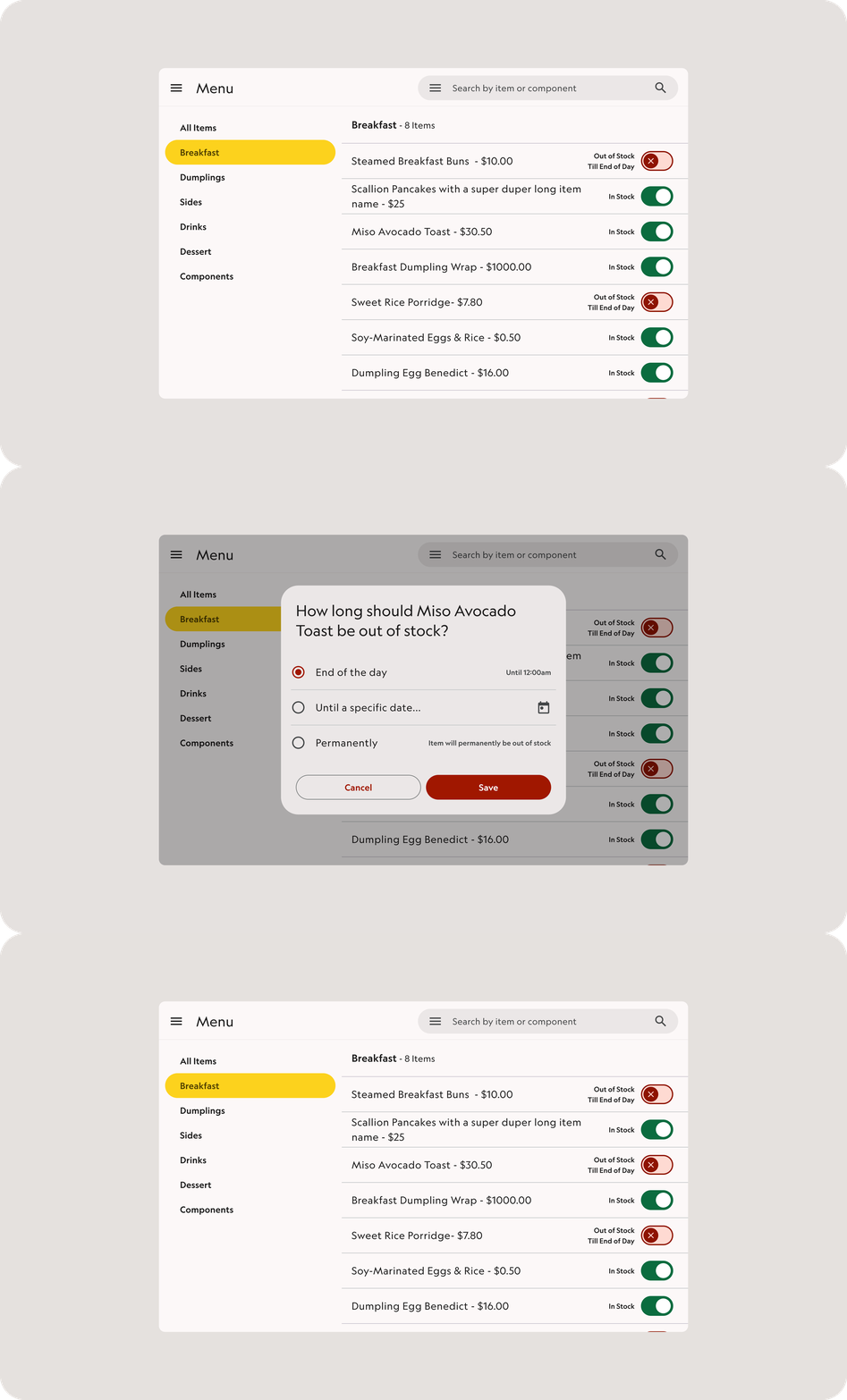
Out-of-stock isn’t binary — it’s contextual and time-based. Marking an item unavailable during breakfast doesn’t mean it should quietly return during dinner, or mid-service.
I redesigned inventory interactions around intent and duration, introducing clearer controls for how long items should remain unavailable, and aligning stock behaviour with real service periods.
Why it matters
Reduced accidental menu changes, improved predictability, and gave restaurants more confidence managing inventory during busy service. The new model scales to complex menus and supports proactive inventory management — without increasing cognitive load at the point of use.